
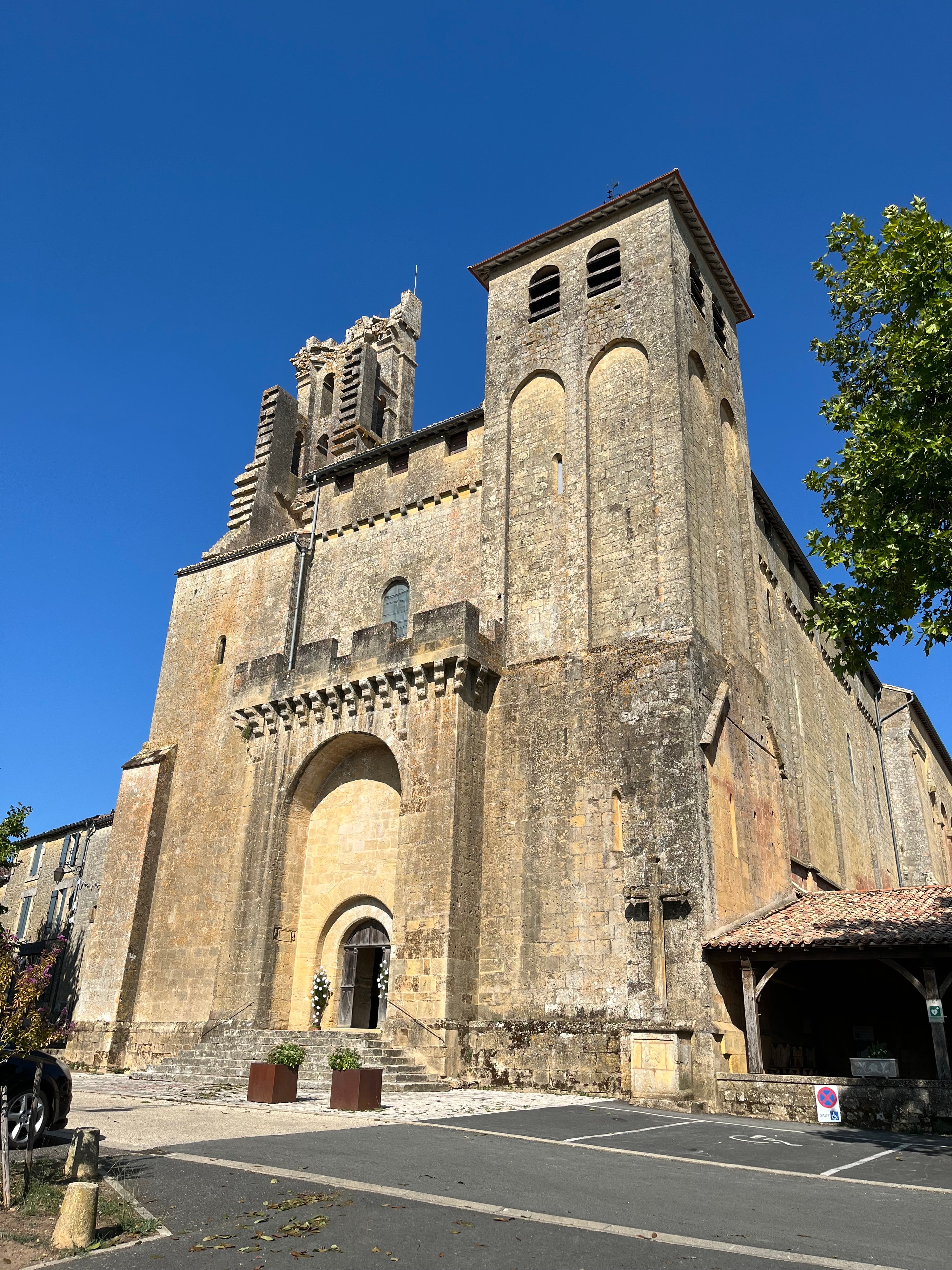
Saint-Avit-Sénieur, Dordogne
The Village & Surroundings
Saint-Avit-Sénieur — a place where history, pilgrimage and the rhythms of the Périgord countryside converge
A village with a thousand years of stories
Perched on a ridge above the Couze valley, Saint-Avit-Sénieur is one of the most quietly remarkable villages in the Dordogne. Its great Romanesque abbey dominates the skyline, its medieval streets have barely changed in centuries, and the surrounding countryside — rolling hills, sunflower fields, walnut orchards — is as beautiful as anywhere in France.
Chez Lapage sits at the heart of the village, steps from the abbey and the ancient pilgrim route that still passes through on its way to Santiago de Compostela. It is a place that rewards those who slow down.
Romanesque grandeur in the heart of the village
The Abbey of Saint-Avit-Sénieur
The Abbey of Saint-Avit-Sénieur was founded in the 11th century on the site where the hermit Avitus — a former soldier who renounced the world — lived and died around 570 AD. His tomb became a place of pilgrimage, and the Benedictine monks who settled here built one of the most impressive Romanesque churches in the Périgord Noir. The abbey is a UNESCO World Heritage Site, recognised as part of the Routes of Santiago de Compostela in France.
The abbey church, with its soaring nave, fortified towers and carved capitals, is a listed historic monument. Unusually, it also served as a fortified refuge during the Hundred Years' War — the towers were added in the 14th century and the village sheltered within its walls. You can explore the abbey freely; it is open year-round and just a two-minute walk from Chez Lapage.
The small museum beside the abbey traces the life of Saint Avitus and the history of the monastic community, with Roman-era finds from the surrounding area.

GR 652 — the Périgord route to Santiago de Compostela
The Way of Saint James
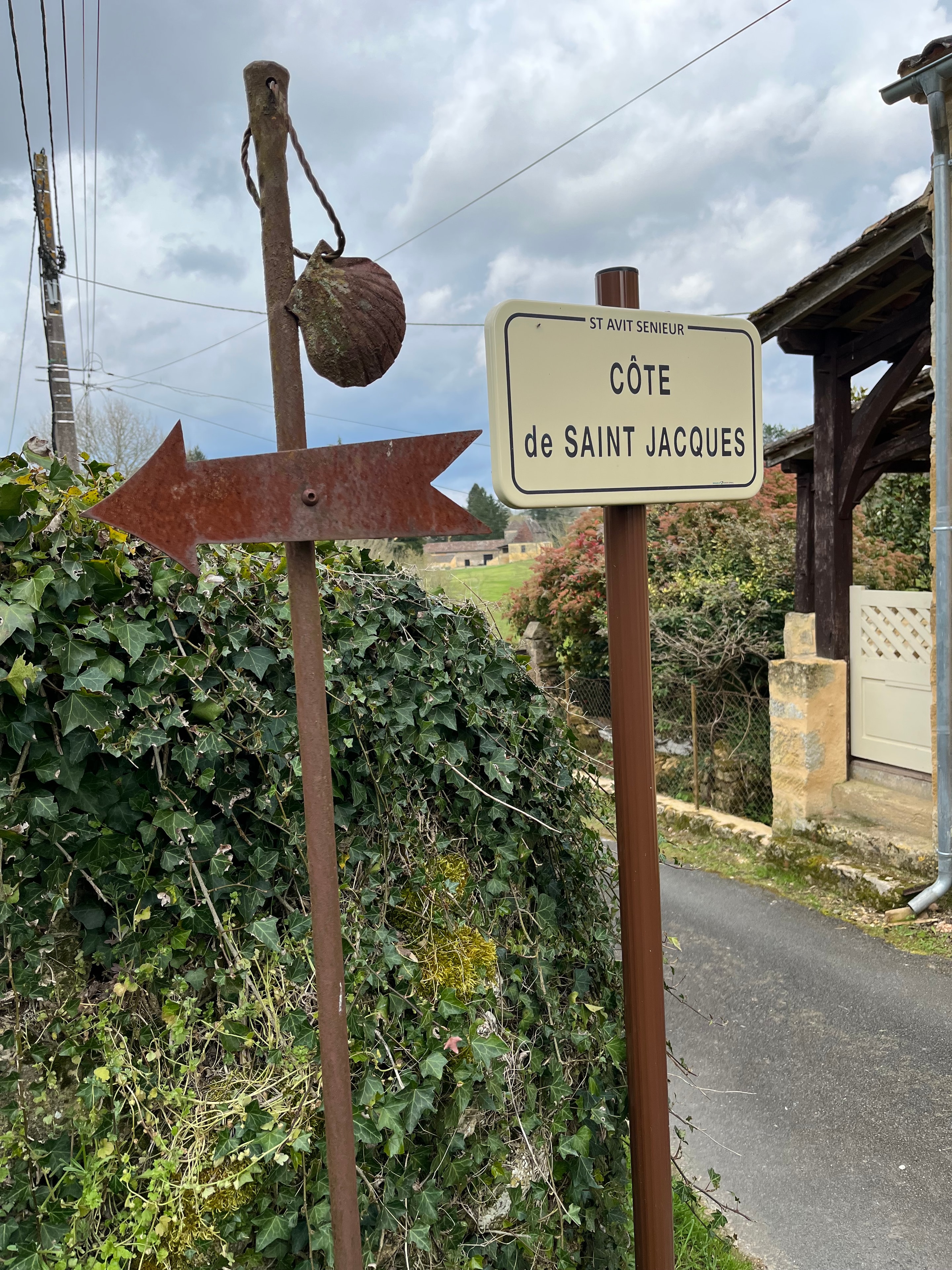
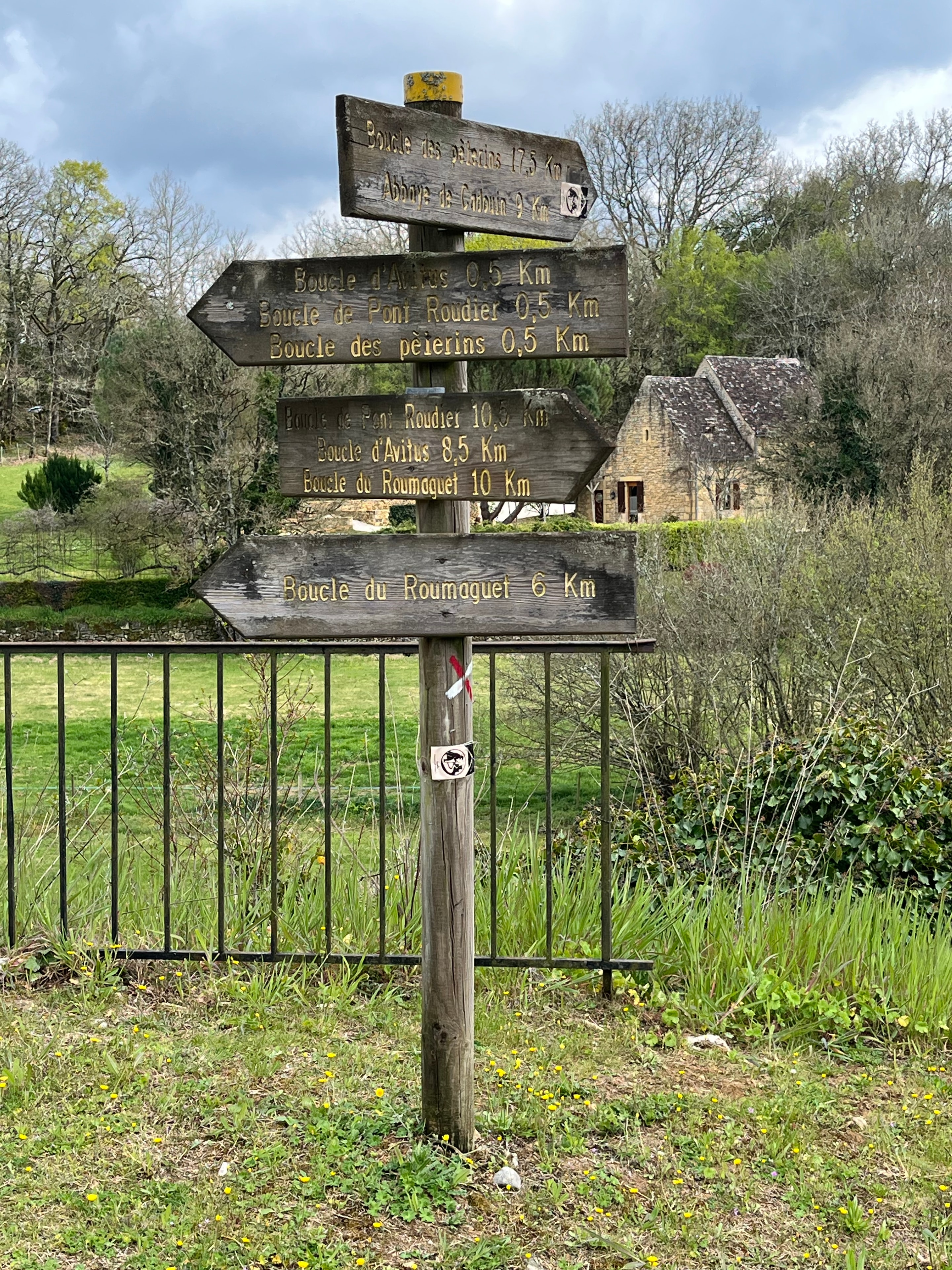
Saint-Avit-Sénieur lies on the GR 652, one of the historic French routes of the Camino de Santiago — the Via Turonensis variant that passes through the Périgord on its way south to the Pyrenees and ultimately to the cathedral of Santiago de Compostela in Galicia, Spain.
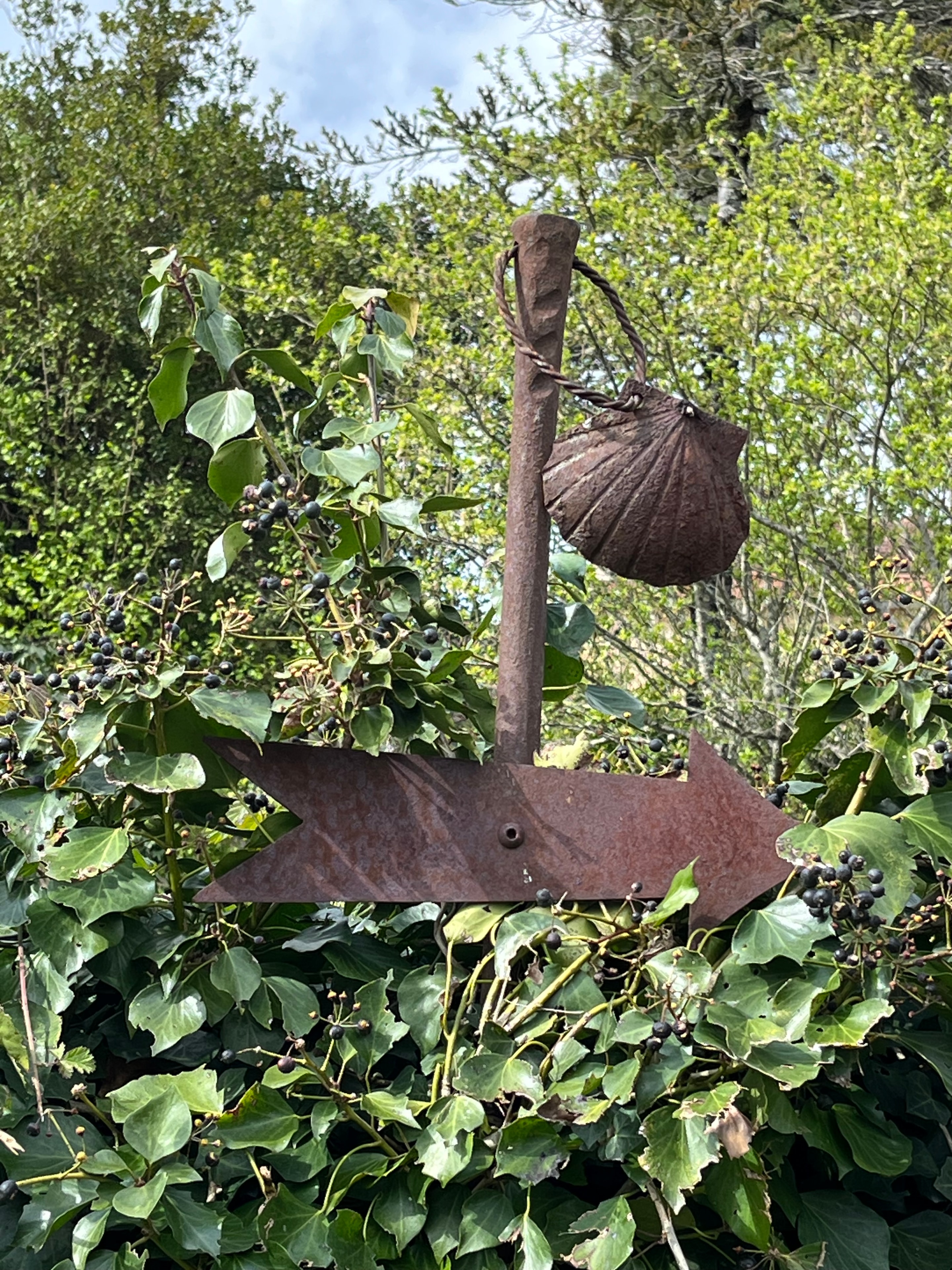
Pilgrims have been passing through this village for over a thousand years, drawn by the tomb of Saint Avitus and the abbey that grew up around it. Today walkers following the yellow shell waymarks still stop here to rest, to visit the abbey, and to have their pilgrim passports stamped. The route continues south through the Dordogne valley and into the Lot-et-Garonne.
Whether you are walking the full Camino or simply exploring the local footpaths, the GR 652 offers some of the most beautiful walking in the region — through oak forests, past limestone outcrops, and along quiet lanes lined with wildflowers. Chez Lapage is happy to welcome pilgrims; please enquire about early breakfast arrangements.

Medieval new towns of the Périgord and Agenais
The Bastide Towns
The countryside around Saint-Avit-Sénieur is dotted with bastides — the planned medieval new towns founded in the 13th and 14th centuries by both the French Crown and the English Plantagenet kings during their long struggle for control of Aquitaine. Built to attract settlers, they were laid out on a grid around a central arcaded market square, and many survive almost intact today.
Beaumont-du-Périgord, just 8km away, is one of the finest English bastides in the region, with its remarkable fortified church of Saint-Front and its arcaded square. Issigeac, 12km south, is a circular bastide with a beautiful bishop's palace and a wonderful Sunday market. Monpazier, 20km to the south-east, is considered the best-preserved bastide in France — its 13th-century square and covered market halls are extraordinary.
Further afield, Domme — a royal French bastide perched dramatically above the Dordogne river — and Villefranche-du-Périgord, famous for its chestnuts and cèpes mushrooms, are both within easy driving distance. A tour of the bastides makes for a wonderful day out, combining history, architecture, markets and excellent local food.
Vineyards, châteaux and accompanied tastings
Bergerac Wine Country
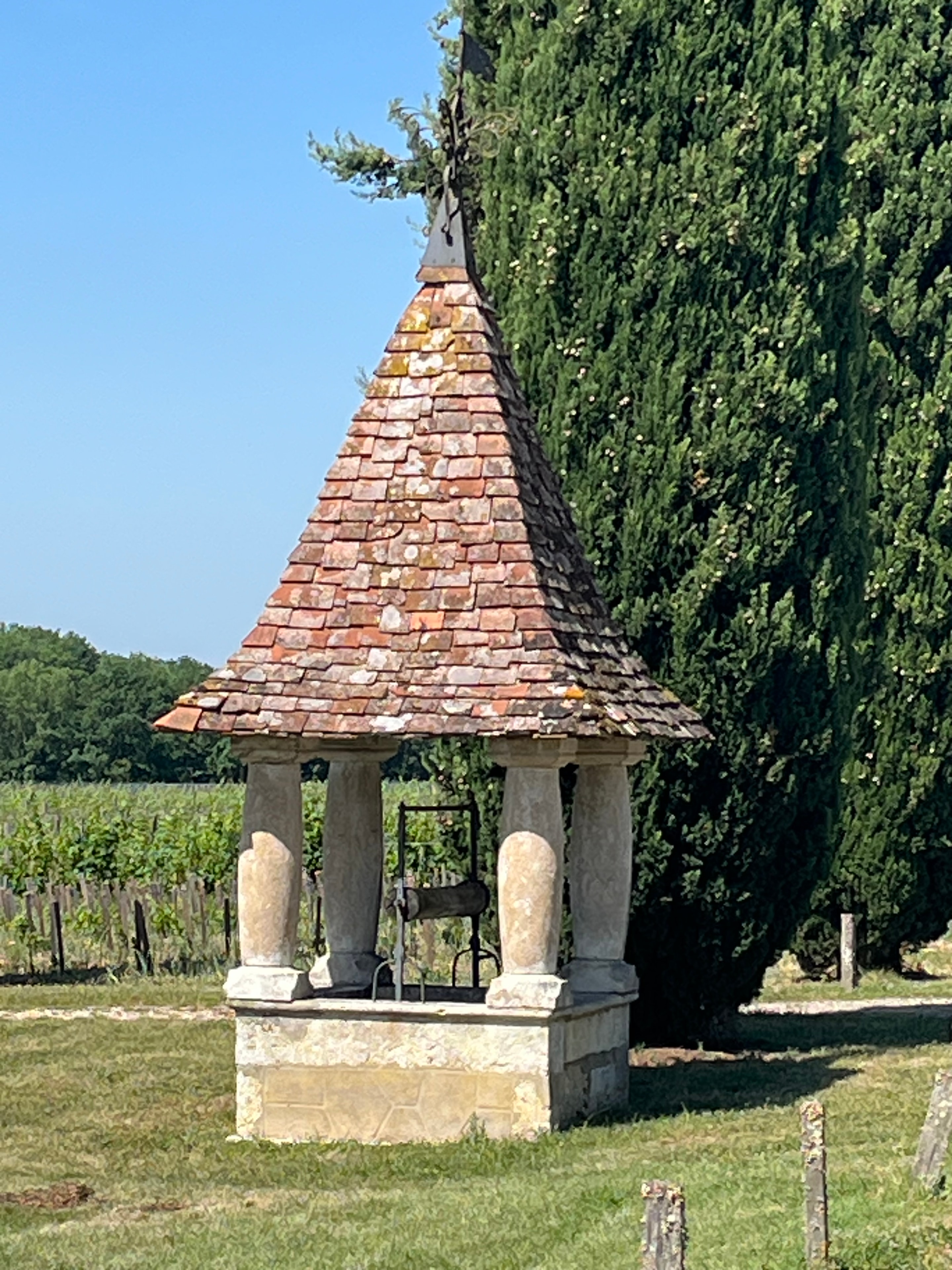
The Bergerac appellation stretches across the hills and valleys to the west, producing wines that have been celebrated since the Middle Ages. Reds, whites, rosés and the famous sweet Monbazillac — made from grapes left to develop noble rot on the south-facing slopes above the Dordogne — are all produced within easy reach of Chez Lapage.
Many of the wine châteaux and cave cooperatives welcome visitors for tastings and cellar tours, and the landscape of the vineyards is beautiful in every season — from the bright green of spring through the golden harvest of September and October.
We are happy to arrange accompanied vineyard visits and wine tastings for guests who would like to explore the region's wines without any worry about driving. Simply enquire at the time of booking and we will put together something to suit your interests and schedule.
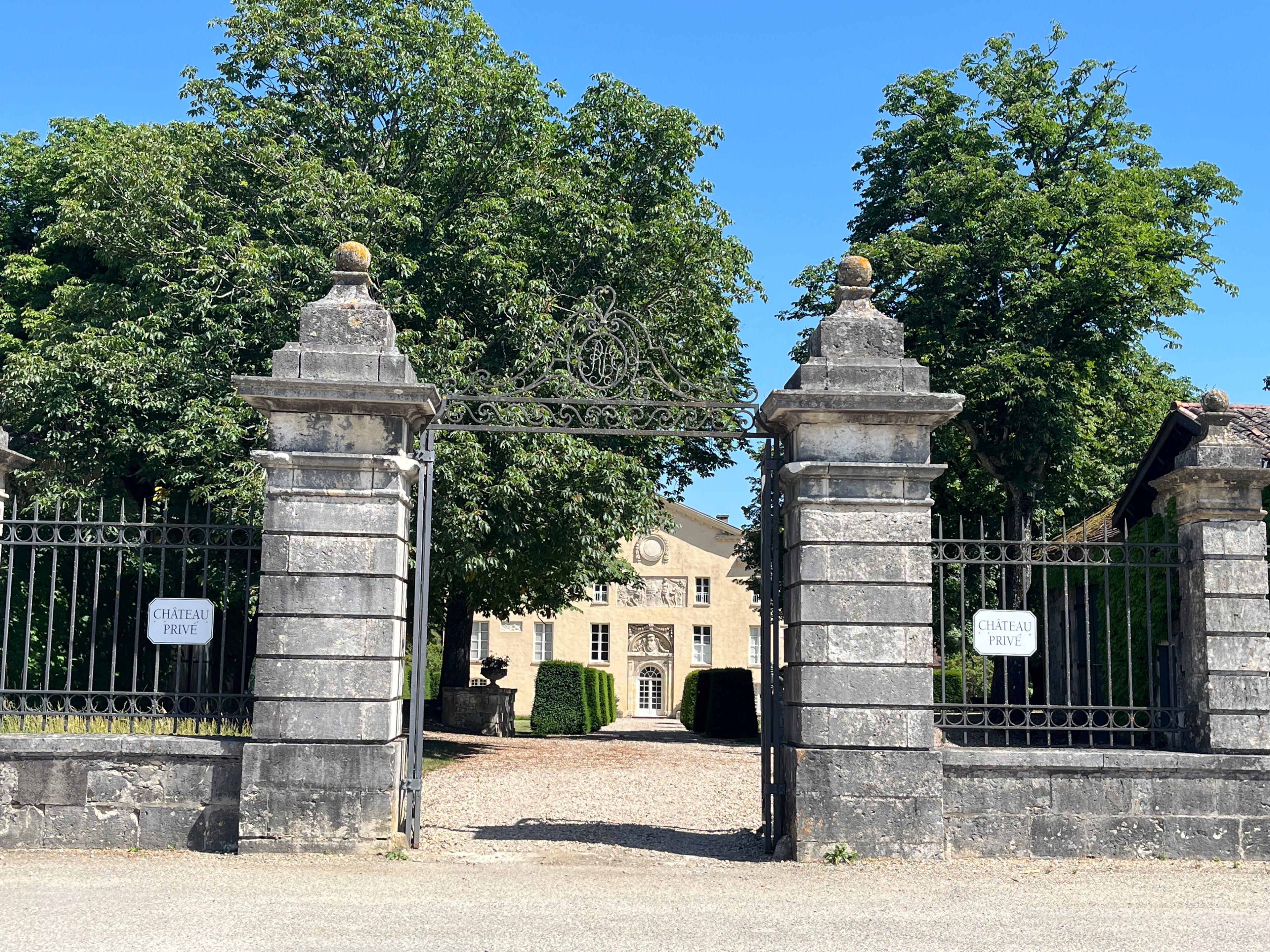
Château de la Jaubertie — one of the finest wine estates in the Bergerac appellation

From cliff-top fortresses to prehistoric art
Châteaux, Caves & Wider Horizons
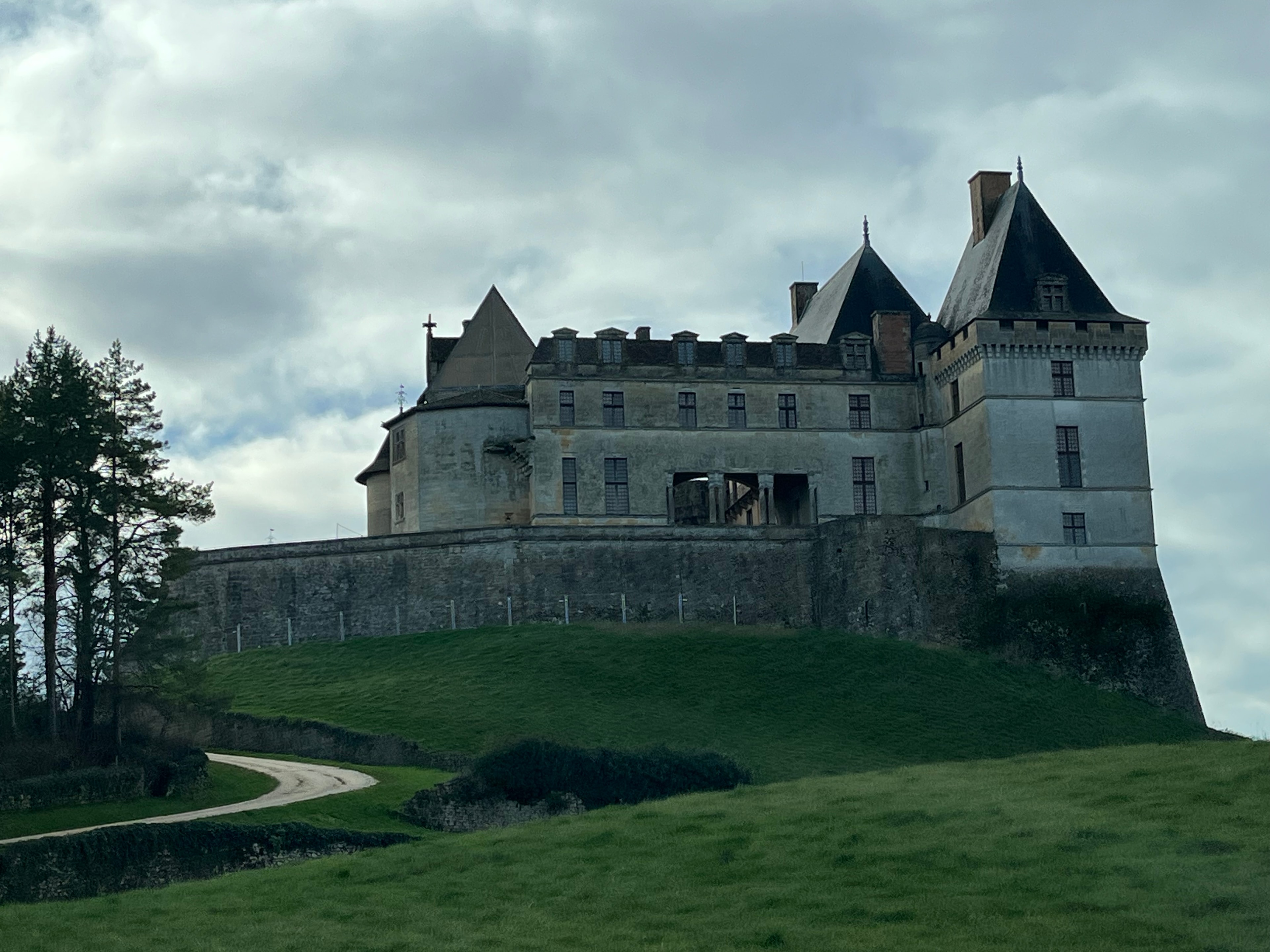
The Dordogne is one of the most château-rich regions in France, and several of the finest are within easy reach. Château de Beynac, perched dramatically on a limestone cliff above the river, and Château de Biron, one of the great feudal fortresses of the Périgord with its extraordinary collegiate chapel, are both well worth a visit. Castelnaud, facing Beynac across the valley, houses an excellent museum of medieval warfare.
Further north, in the Périgord Noir, the Vézère valley is a UNESCO World Heritage Site and home to some of the most important prehistoric art in the world. The Lascaux Caves — discovered in 1940 and now replicated in the extraordinary Lascaux IV international cave art centre — are an unmissable experience. Château de Hautefort, a little further north still, is one of the most elegant Renaissance châteaux in the south-west, with formal gardens and sweeping views across the Périgord Blanc.
A day trip north into the Vézère valley combines prehistoric caves, cliff-top villages such as Les Eyzies and La Roque-Saint-Christophe, and the beautiful market town of Sarlat-la-Canéda — one of the best-preserved medieval towns in France. We are happy to suggest itineraries and routes to make the most of your time.

Périgord Pourpre — the purple Périgord
The Dordogne Countryside
Saint-Avit-Sénieur sits in the Périgord Pourpre — the southernmost of the four Périgords, named for the vineyards of Bergerac that colour the landscape in autumn. This is a gentler, less-visited corner of the Dordogne than the famous cliff-top châteaux of the Vézère valley to the north, but no less beautiful.
The landscape is one of rolling hills, river valleys, oak and chestnut forests, and fields of sunflowers, maize and tobacco. In summer the light is extraordinary — long golden evenings that seem to last forever. In autumn the forests turn copper and gold, the markets fill with walnuts, chestnuts and cèpes, and the vendange brings the smell of fermenting grapes across the valley.
The Couze valley below the village is perfect for cycling and walking. The Dordogne river itself, 15km to the north, offers canoeing, swimming and the famous cliff-top villages of Beynac, La Roque-Gageac and Castelnaud. The Bergerac wine region, with its châteaux and cave cooperatives, is 25km to the west.
The Surrounding Area
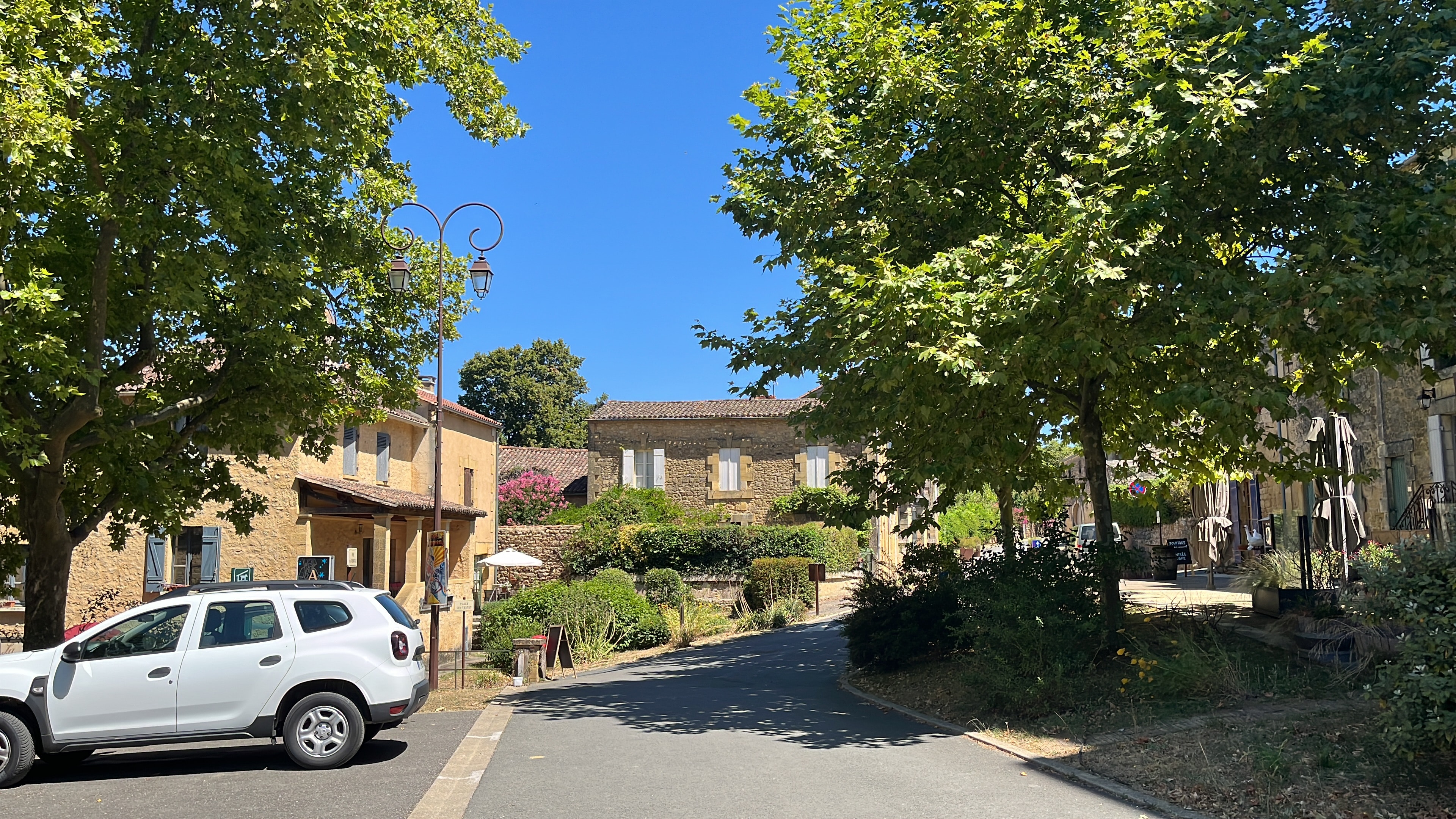
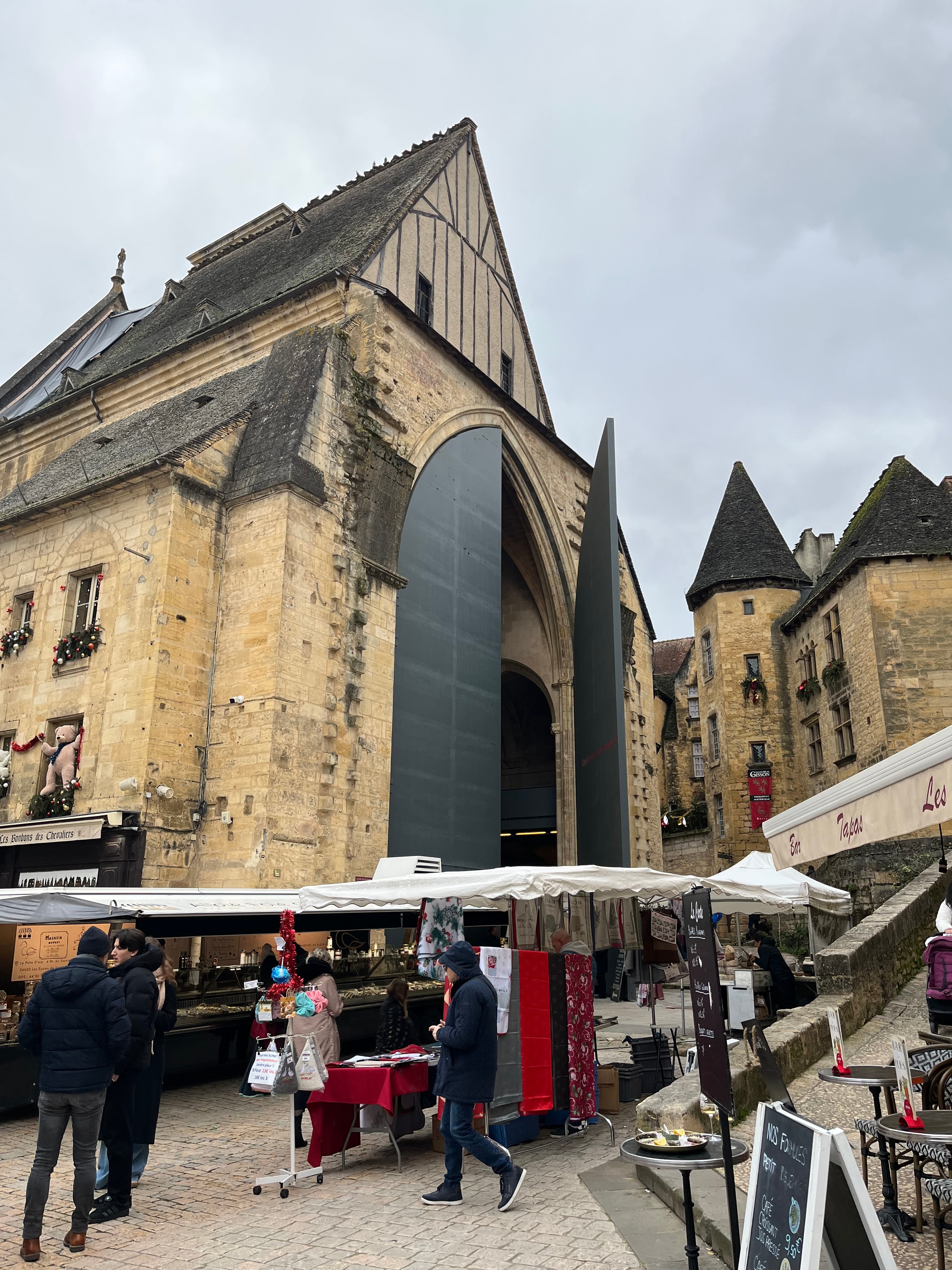
Villages, châteaux, market squares and quiet lanes — the Périgord rewards every turn.

Getting Here & Getting Around
By car
Saint-Avit-Sénieur is 35 minutes from Bergerac, 1 hour from Périgueux, and 2 hours from Bordeaux. A car is essential for exploring the region.
By air
Bergerac Dordogne Périgord Airport (EGC) has direct flights from the UK and is just 35 minutes by car. Bordeaux–Mérignac (BOD) offers more international connections and is approximately 2 hours away.
By train
The closest stations are Lalinde and Le Buisson-de-Cadouin, both approximately 15 minutes away by car, on the Bordeaux–Bergerac–Sarlat line. Transfers can be arranged by reservation prior to arrival or departure for a small charge to cover fuel — please ask when booking.
Local markets
Issigeac Sunday market (12km), Beaumont-du-Périgord Saturday market (8km), Monpazier Thursday market (20km), Bergerac Wednesday and Saturday markets (35km).
Ready to explore?
Book your stay at Chez Lapage and use it as your base for discovering this extraordinary corner of France.